
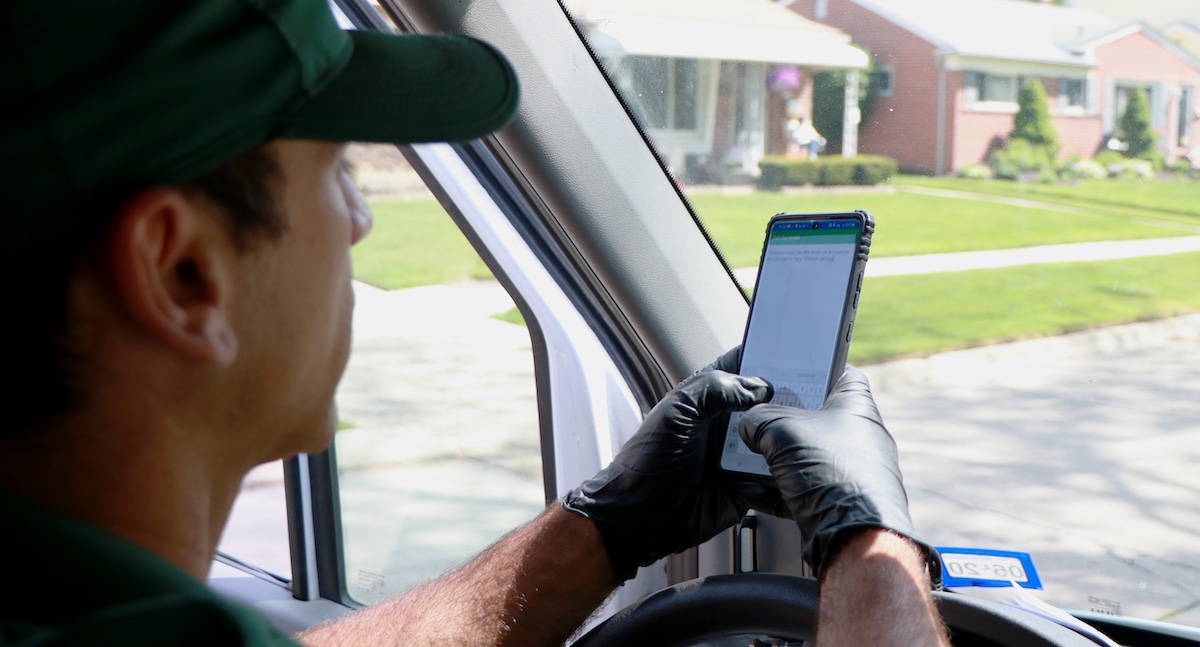
If you're still running your lawn care business on paper route sheets, a whiteboard schedule or even a desktop program you can only access from the office, you already know the friction: Missed calls, scheduling mix-ups, invoices that sit in the truck for three days before anyone enters them into the system, customers who have no idea when their techs will be showing up.
Mobile technology has changed what's possible for field service businesses — and the lawn care operators who have made the switch aren't going back. Here's why.
1. Scheduling and Routing That Works in the Real World
Paper schedules don't update themselves when a technician calls in sick, a customer cancels at the last minute or traffic turns a tight route into a disaster. A mobile app puts live scheduling in everyone's hands so changes happen in real time and the whole business stays on the same page without a single phone call.
Route optimization goes hand in hand with scheduling. Instead of manually plotting stops on a map or relying on a technician's memory of the fastest way around a neighborhood, mobile apps calculate the most efficient routes automatically. Less windshield time means more stops per day, lower fuel costs and technicians who aren't burned out before noon.
2. Payments Collected in the Field, Not Chased From the Office
One of the biggest cash flow drains in lawn care is the gap between when work gets done and when payment actually comes in. When collecting requires a trip back to the office, a mailed invoice or a follow-up phone call, that gap stretches. And the longer it stretches, the more time your team spends chasing money instead of earning it.
A mobile app puts payment collection where it belongs: in the field, at the moment the job is complete. Technicians can accept payments on the spot, eliminating the lag between service and settlement. No more invoices sitting in a truck. No more end-of-week reconciliation headaches.
It’s even better when the app facilitates autopay enrollment right on the spot before the technician even leaves the property. When customers are set up at the point of service, payment happens on schedule from that point forward without anyone having to ask for it. Your cash flow becomes predictable, your office staff stops spending hours on collections calls, and your customers get a seamless experience that makes them more likely to stay. For a business built on recurring services, that kind of payment consistency isn't just convenient — it's a competitive advantage.
3. Real-Time Crew Management Without the Guesswork
When your crews are in the field, do you actually know what's happening? With a paper-based or desktop-only system, the honest answer is usually no, at least not until someone calls in or comes back to the office.
Mobile apps give owners and managers real-time visibility into where technicians are, which jobs have been completed and whether the day is running on schedule. GPS tracking confirms crews are at the right properties. Job completion notifications let the office stay ahead of customer inquiries. And if something goes wrong — a breakdown, a missed stop, an unhappy customer — you know about it immediately rather than at the end of the day when it's too late to fix.
4. Your Entire Business in Your Pocket
Customer history. Service notes. Chemical application records. Equipment details. Property information. Account balances. With a desktop-only system, all of that lives in the office, which means the moment someone steps outside, they're working from memory or making calls to get basic information.
A mobile app puts your entire operation in your pocket. Technicians can pull up full property details before knocking on a door. Owners can check in on the business from anywhere. Office staff can answer customer questions without putting anyone on hold. The information your team needs is always available, regardless of where they are. That means fewer mistakes, faster service and a team that can actually operate independently.
5. Communication That Keeps Customers in the Loop
One of the most common reasons lawn care customers cancel is not poor service; it's feeling like they don't know what's going on. When is my technician coming? Did they show up? What did they do? Without a system that automates those answers, your office staff is fielding calls all day and customers are left to wonder.
Mobile apps make proactive communication automatic. Appointment reminders go out before the visit. Completion notifications go out when the job is done. Condition alerts flag anything the technician noticed on the property. Customers feel informed and taken care of — without your team spending hours on the phone every day.
The Bonus Benefits Worth Knowing
Going mobile opens up additional advantages that compound over time.
Easier upselling. When a technician is standing on a property and can see the customer's full service history, it's easy to identify and present relevant add-on services on the spot — mosquito control, aeration, grub treatment. That's a revenue conversation that can’t happen when the technician has no information and no way to process a sale in the field.
A paperless operation. Paper gets lost, damaged and misfiled. Digital records don't. Every estimate, invoice, service note and customer interaction captured on a mobile device is stored, searchable and accessible the moment you need it, no filing cabinets required.
Better data for better decisions. When your field operations are running through a mobile app, the data flows automatically into your reporting. You can see which routes are most profitable, which technicians are most productive and which services are driving the most revenue without manually compiling anything. That information makes every decision you make about the business sharper.
The gap between a paper-based lawn care operation and a mobile-enabled one isn't just about convenience. It shows up in your cash flow, your route efficiency, your customer retention and ultimately your bottom line. The businesses growing fastest in this industry aren't doing it with bigger crews or more trucks — they're doing it by getting smarter about how they manage the ones they already have.
Want to see what mobile technology looks like in practice? Schedule a demo and we'll show you how RealGreen Mobile can transform your field operations.